
Why call on orientaction?
There are times in life when you feel lost, or when you're going through a difficult period. You feel bad, you can't make decisions to get out of it. You feel stuck, unable to take action and solve the problems you're facing. This can happen in one or more areas of your life: at work, in your relationship, in your family, with friends or on an intimate level. When this type of situation arises, you have three choices:
1. Do nothing:
This is obviously the worst solution, because it's extremely rare for problems to solve themselves. On the contrary, they usually get worse over time!
2. Attempting to resolve difficulties alone:
This can be a time-consuming process, with an increased risk of failure. When you're on your own, ideas run around in your head, often in a loop, without a solution emerging. It's hard to see things objectively. On many subjects, the advice of those closest to us is irrelevant. We'd also like to be able to make choices without feeling judged.
3. Use an Orientaction coach:
This approach will help you resolve your difficulties faster, more effectively and with greater serenity. The coach will give you the tools you need to gain perspective on your situation, to better understand what's going on and make the right decisions. A coach will never judge you. He/she will listen to you, support you and help you take action to resolve your difficulties.
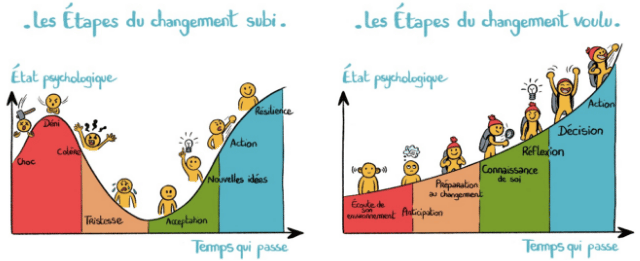
Principles of the Orientaction coaching method
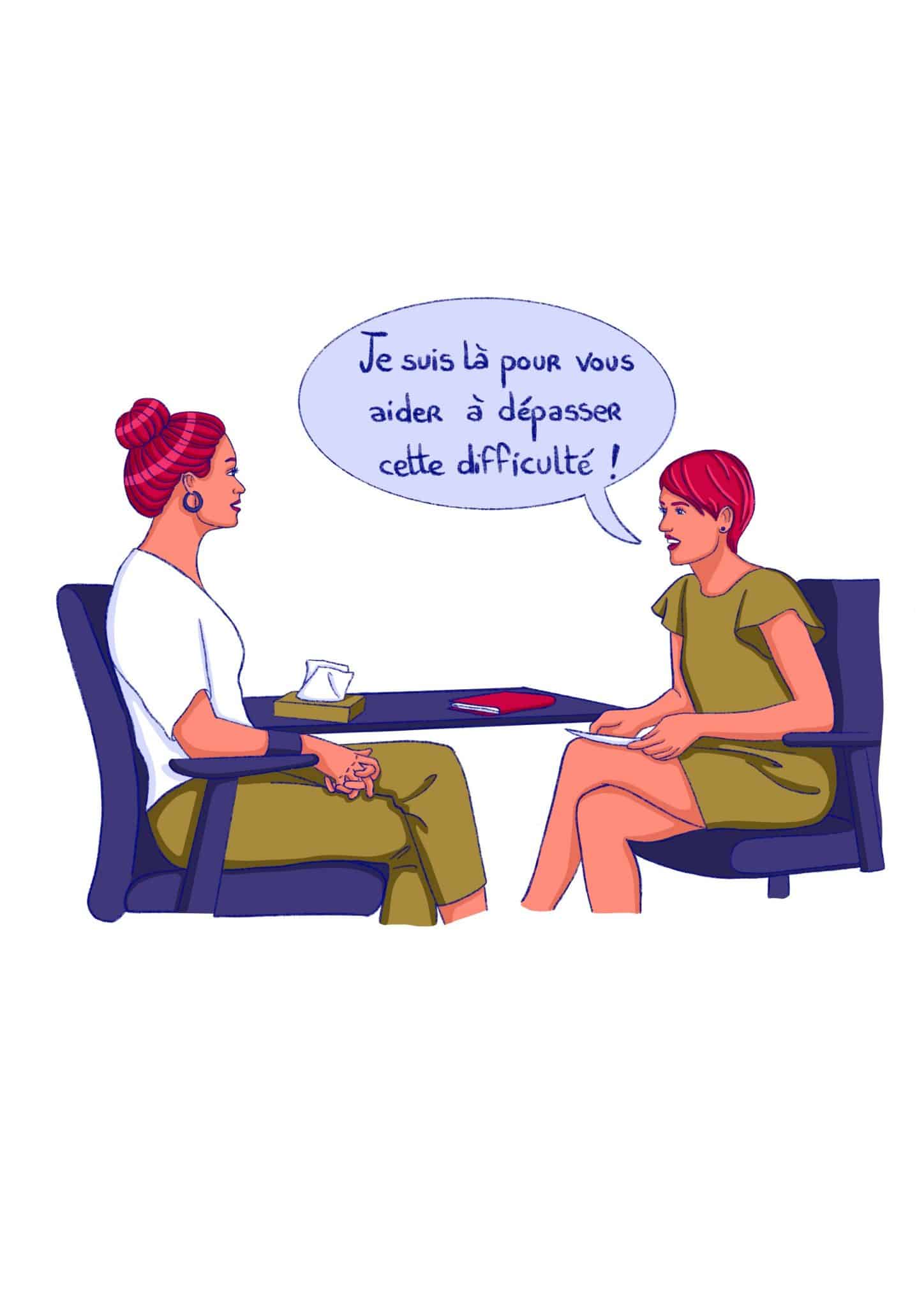
Situations of unhappiness require change in order to be resolved. The principle of the Orientaction coaching method is that you take the initiative and play a full part in this change. The two diagrams above show how change works on a psychological level, when it is undergone or, on the contrary, when it is desired. We can clearly see that being fully involved in change will enable you to resolve your difficulties faster, more effectively and with greater serenity.
How Orientaction coaching works
Orientaction coaching takes place in 2 main stages:
1. Diagnosis,
2. Make decisions and take action.
Step 1:
Diagnosis
To make the "diagnosis", we start by helping you to find out exactly what your Values, Needs, Personality and Talents are.
Our humanist vision of the human being
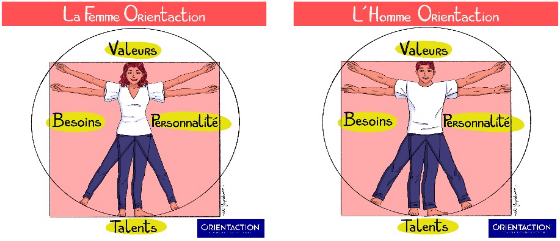
Each person is characterized by 4 essential dimensions: Values, Needs, Personality and Talents.
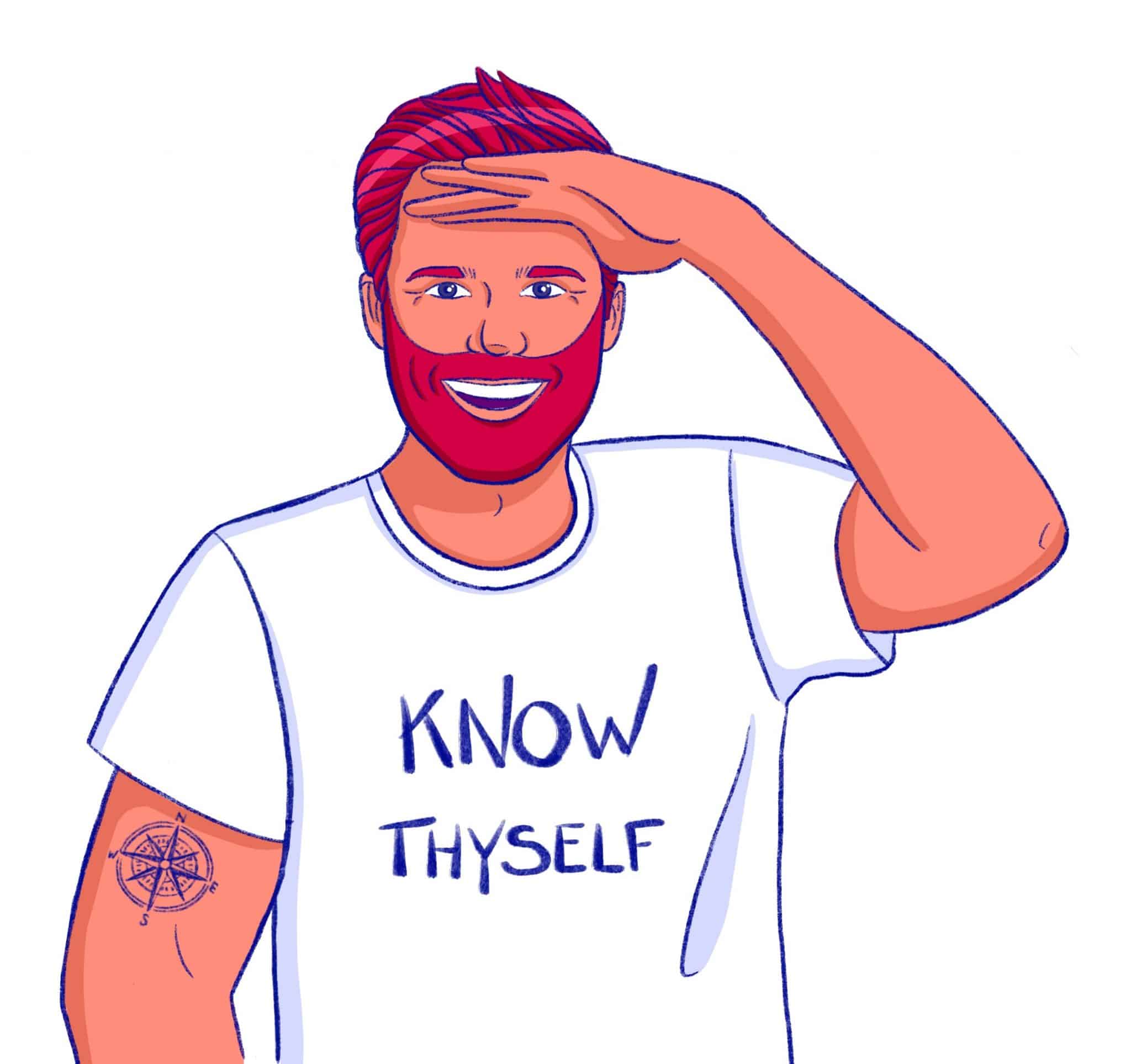
These four dimensions constitute a person's "four cardinal points". By relying on these 4 dimensions, we can make the decisions that will make us happy. Socrates said, "Know thyself". If the environment in which you evolve corresponds to your Values, your Needs, your Personality and your Talents, then you'll be happy. The reverse is also true. This applies to all areas of your life: your work, your relationship, your family, your friends and your intimate life.
People suffering from depression often live in an environment that is out of step with who they are deep down, in one or more areas of their lives. It's by taking certain decisions and taking action that they can gradually find their way back to well-being, with the support and guidance of a professional.
To help you get to know yourself better (Values, Needs, Personality, Talents), we use 4 tests in addition to interviews:
Meaning : Testing values
Sens® is a test that enables you to better understand your values, and in particular to identify your guiding value.
The theoretical model on which this test is based is Schwartz's value model (2006), updated and adapted by Emeric Lebreton, PhD in psychology and researcher.

Needs: Needs test
Needs® is a test that helps you better understand your professional needs, and in particular identify your primary need.
The theoretical model on which this test is based is Maslow's needs model (1943), updated and adapted by Emeric Lebreton, PhD in psychology and researcher.

Preferences : Personality test
Préférences® is a test that helps you better understand how your personality works and identify your deepest preferences.
The theoretical model on which this test is based is Jung's personality model (1950), updated and adapted by Emeric Lebreton, PhD in psychology and researcher.

Harmony: Testing soft-skills
Harmony® is a test that assesses 16 soft skills.
The theoretical model was developed by Emeric Lebreton, PhD in psychology and researcher. This test introduces a measure of each soft skill. It enables us to identify areas of strength and areas for improvement, and thus determine the most appropriate career choices.
Once we've identified your Values, Needs, Personality and Talents, we "compare" them with what you're experiencing in your different areas of life.
Work, couple, family, friends and/or intimate life.
This "matching" work helps identify the sources of unhappiness and the sources of happiness. Solutions begin to emerge, requiring decisions to be made and actions to be taken.
Step 2:
Make decisions and take action
Once you and your coach have identified the causes of your unhappiness and the conditions that could promote your happiness, you can make the right decisions. Some decisions may not be easy to make. That's why your Orientaction coach will support and assist you throughout the process. You're no longer alone in facing life's challenges. You're supported in building a life that makes you truly happy! You gradually emerge from depression.
Why choose orientaction
The work of a classical psychologist focuses on listening and analysis. In a traditional approach, the psychologist is primarily interested in the past. In our experience, this is not the best way to help people resolve their difficulties.
Listening is essential, the past must be taken into account, but above all decisions must be made and action taken. The Orientaction approach goes further than conventional psychology, and focuses on the future!

Dr. Emeric Lebreton, creator of the Orientaction coaching method
Emeric Lebreton is a doctor of psychology and creator of the Orientaction coaching method. With his team of over 700 consultants, he has accompanied more than 38,000 people on the path to professional and personal change.
He is also the author of a number of best-selling books in France and abroad, including Ce que j'aimerais te dire, La méthode 10/10 and Un été avec moi-même, which have sold over 250,000 copies to date.
Why call on a coach who uses the Orientaction method rather than another coach?
There are many coaches and many approaches to coaching. It's not easy to sort them out. Orientaction is a nationally recognized network with over 15 years' experience, over 38,000 people coached and over 700 consultants trained in our methods. The relevance of our approach has been repeatedly highlighted by public authorities (European award in 2009, accreditation by various state bodies, etc.). Our work has also been featured in major newspapers and on television.
Find your nearest branch
When you choose Orientaction, you're choosing the very best in personal and professional coaching today. You're choosing a benchmark. So you can be sure of making the right choice!
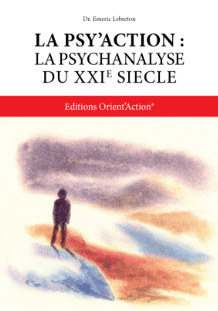
To find out more about our approach, you can read La Psy'Action, la psychanalyse du XXIe siècle, a comprehensive book written by Dr. Emeric Lebreton.
This book sets out the theoretical foundations of our method and the main techniques used to support people in their fight against depression and on the road to well-being.
This book sets out the theoretical foundations of our method and the main techniques used to support people in their fight against depression and on the road to well-being.
Our support packages and rates
At Orientaction, we prefer to talk about investment rather than price. We offer a choice of different support packages, depending on your situation and budget. All our packages are payable in instalments. We offer support from the age of 16.
Step 1:
Diagnosis
Essentiel" diagnostic package
1 area of life1h personalized interview with a certified Orientaction coach.
+ 4 tests: Values, Needs, Personality and Talents. 1h feedback session with personalized summary.
249€ INCL.VAT
Payable in 5 instalments of €50.
Essentiel +" diagnostic package
2 areas of life1h personalized interview with a certified Orientaction coach.
+ 4 tests: Values, Needs, Personality and Talents. 1h feedback session with personalized summary.
449€ INCL.VAT
Payable in 9 instalments of €50.
Integral" diagnostic package
5 areas of life1h personalized interview with a certified Orientaction coach.
+ 4 tests: Values, Needs, Personality and Talents. 1h feedback session with personalized summary.
849INCLUDING VAT
Payable in 10 instalments 85€.
Step 2:
Make decisions and take action
Essentiel" diagnostic package
1h personalized interview with a certified Orientaction coach.
+ 4 tests: Values, Needs, Personality and Talents. 1h feedback session with personalized summary.
249€ INCL.VAT
Payable in 5 instalments of €50.
Essentiel +" diagnostic package
1h personalized interview with a certified Orientaction coach.
+ 4 tests: Values, Needs, Personality and Talents. 1h feedback session with personalized summary.
449€ INCL.VAT
Payable in 9 instalments of €50.
Integral" diagnostic package
1h personalized interview with a certified Orientaction coach.
+ 4 tests: Values, Needs, Personality and Talents. 1h feedback session with personalized summary.
849INCLUDING VAT
Payable in 10 instalments 85€.